
In this episode, Aila Tasse explores what defines a leader in a Disciple-Making Movement (DMM). While leadership is often understood through titles and positions, movement leaders are recognised by action, fruit and multiplication. This can be challenging when multiplication is not yet happening, but Dave encourages listeners not to disqualify themselves. Leadership begins with obeying God and helping others do the same—whether leading one person or many.
Looking for Multipliers
Movement leaders have learned and practised the principles of DMMs and are helping others multiply. Like Jesus, we need to intentionally identify, equip and mentor people who desire to multiply.
Aila challenges us not to focus on those who talk much but do little. The task is urgent, and movement leaders are always doers.
Movement leaders focus on three dimensions:
- Length: Is the movement multiplying through successive generations?
- Depth: Is the DNA of obedience and multiplication being passed on?
- Width: Is the movement expanding into new communities, people groups and/or regions?
Grassroots and regional equipping hubs allow leaders to learn, share and network together. They also help movement leaders identify gaps—including unreached people groups, diaspora communities in our cities and increasingly unreached Western populations.
Shepherding Movements Through Critical Stages
Rather than merely collecting “data,” Aila describes measuring movement health as ‘shepherding’. Like a shepherd caring for sheep, leaders need to know whether a movement is healthy, struggling or declining—and understand why.
Movements can grow rapidly through their early generations but often plateau between the fifth and seventh generations. Without new leaders and intentional action, momentum may decline and movements can eventually die.
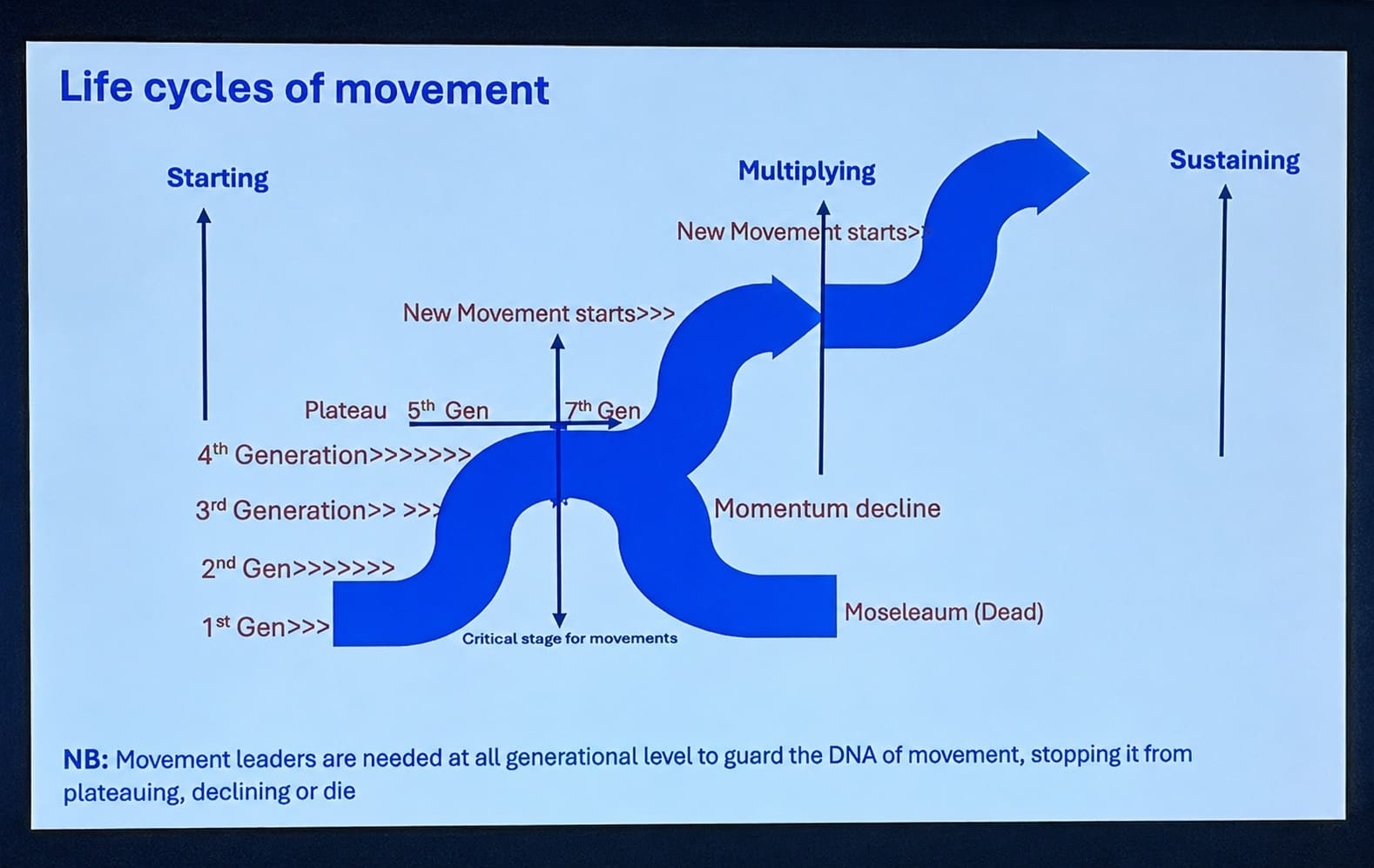
Movement leaders are therefore needed at every generational level to guard the movement’s DNA and help it continue multiplying. One leader cannot do everything. Movements are sustained when many leaders are developed, equipped and released.
As the African saying reminds us:
“If you want to go fast, go alone. If you want to go far, go with someone.”
Takeaway question:
How can you intentionally identify, equip and release movement leaders who will multiply in your context?
Podcast: Play in new window | Download (Duration: 21:14 — 6.9MB)
Subscribe: Apple Podcasts | Android | Email | RSS | More